The Rocket Company Just Bought the Code Machine for $60 Billion
The rocket company now owns the machine that writes the machines. Sixty billion dollars, all stock, and the line between aerospace, compute, Grok, and autocomplete just dissolved into one extremely expensive developer funnel.
- $60Ball-stock deal
- Q3expected close
- IDEstrategic surface
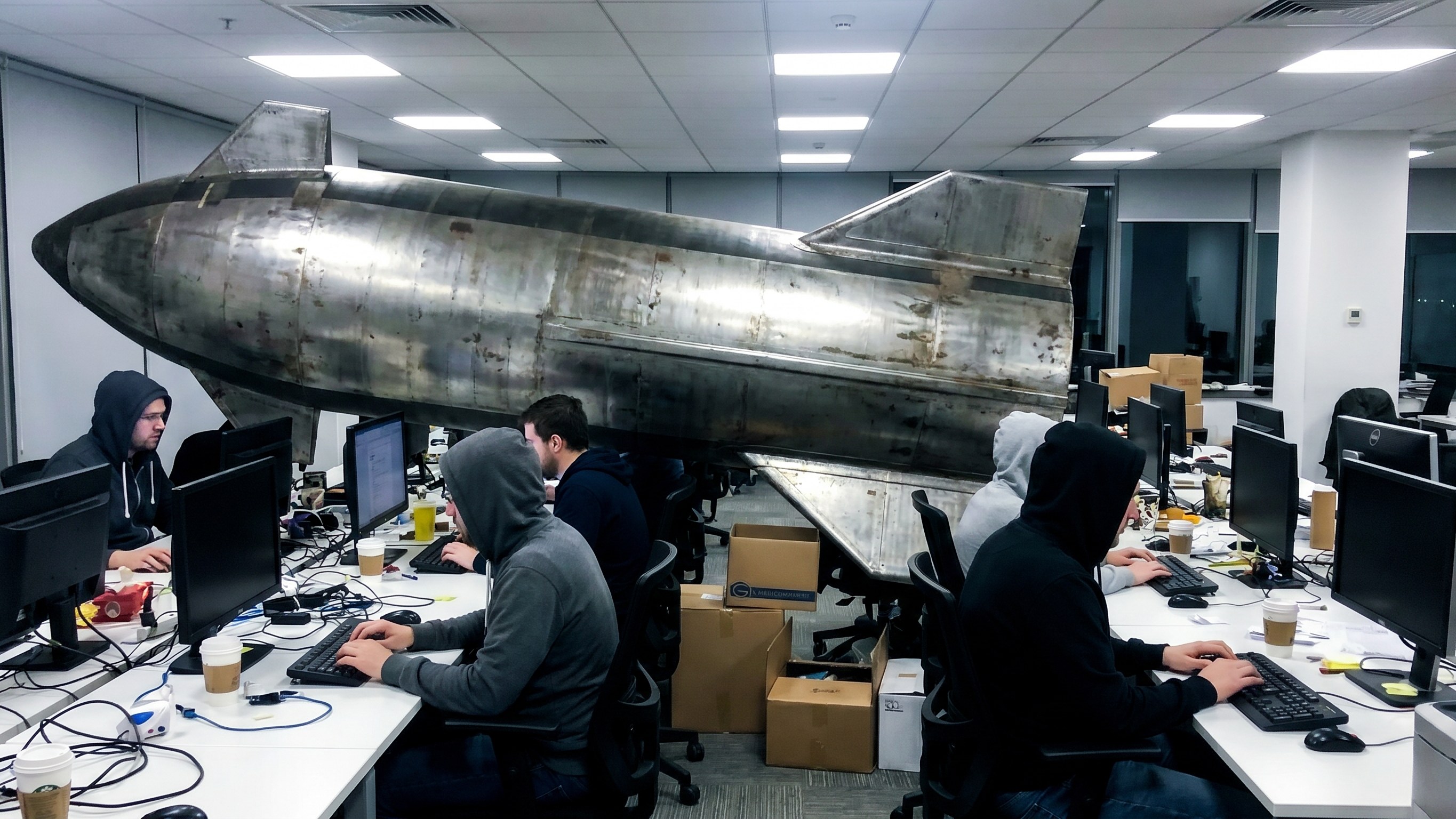
SpaceX buying Cursor's parent company for $60 billion is the kind of deal that makes the old category labels look useless. A rocket company is moving to own one of the daily surfaces where software now gets written by humans and machines together.
Cursor is not just a code editor in this story. It is a place where developers describe intent, ask agents to write code, debug failures, refactor systems, and decide which AI feels trustworthy enough to sit inside the workday.
What happened
- SpaceX agreed to buy Cursor parent Anysphere in a reported $60 billion all-stock deal.
- The deal is expected to close in the third quarter of 2026 if it clears the required gates.
- Cursor gives SpaceX exposure to one of the fastest-growing AI coding surfaces.
- AI coding tools are compute-heavy and depend on latency, trust, model quality, and workflow fit.
- The strategic prize is developer intent: the place where requests become working software.
The SurfaceWhere work becomes code
The reported deal is all stock and enormous, arriving around SpaceX's public-market moment. The headline number matters, but the strategic shape matters more: developer distribution is becoming infrastructure.
- Code editor
- Agent workspace
- Developer habit
- Enterprise workflow
The LeverageCompute meets intent
AI coding tools burn compute, depend on model quality, and live or die by latency, trust, and workflow fit. Put that surface next to a company with deep compute ambitions and the editor starts looking less like an app and more like a control point.
- Inference demand
- Model feedback
- Latency pressure
- Distribution advantage
The RiskDevelopers hate lock-in
There are obvious risks: regulators, culture clash, developer trust, and the possibility that an independent tool loses credibility once it becomes part of a much larger empire. Developers are unusually sensitive to lock-in because their tools sit inside every project they touch.
- Regulatory review
- Tool trust
- Culture clash
- Platform control